MSMM Engineering, LLC

Our Projects

Explore our portfolio of engineering projects across the Gulf South

Golden Triangle Marsh Creation (PO-163)
Coastal Restoration|In Progress

Golden Triangle Marsh Creation (PO-163)

The Golden Triangle Marsh Creation Project (PO-163) was a key project identified by MSMM staff when providing water resources planning for the MRGO Ecosystem Restoration Plan at the USACE New Orleans District. MSMM staff developed the conceptual project as a means to provide natural ecosystem restoration in front of the IHNC Surge Barrier, under the Multiple Lines of Defense strategy for hurricane risk reduction. While the MRGO plan failed to move forward because of the lack of a willing non-Federal sponsor, the Golden Triangle element was brought back as a stand-alone element when the New Orleans District was competing for RESTORE Act funding. Based on having prior knowledge of the project, MSMM was chosen to provide engineering design services for this project. The Golden Triangle marshes chosen for restoration are a highly fragmented intermediate to brackish marsh system that has crisscrossing pipeline corridors and multiple internal and lateral bayous. Upon receiving the job, MRGO staff started the process of field investigations by completing the following: side scan-sonar data identifying hard bottom substrate within Lake Borgne to provide available borrow sites, followed by soil borings at the restoration site and borrow pit location, as well as survey data and bathymetry data. Once field investigations were completed, MRGO started the process of identifying potential design acreage amounts, identifying bayous to be left open for traversing the site, and identifying areas of interest for recreational activities like fishing and hunting. Meeting with multiple user groups was key as all had a distinct interests/needs for the site, and the overall restoration goal of the project needed to be maintained. The restoration goal of the project was to restore and nourish approximately 4,000 acres of marsh. Design features consisted of perimeter dikes, vinyl sheet closure pile structures, and internal weirs. Through a collaborative design process with the engineering branch staff at MVN, the NGO community advocating for restoration of this site, the recreational user groups and the oil and gas companies that rely on this site, MSMM was able to identify the site configuration above as best meeting the design goals of the project. To date the project has not been constructed by USACE, but is being constructed under the RESTORE ACT program, for the Coastal Protection and Restoration Authority of Louisiana.

Lake Borgne, LA

Granger Lake Management Office Building Design
Public Infrastructure|2019|Completed

Granger Lake Management Office Building Design

The previous facilities for the Lake Management staff at Granger Lake have been in a state of disrepair for a number of years. MSMM Engineering was been tasked by the USACE Ft. Worth District to design new facilities for the Granger Lake management staff to utilize for operability of the lake. Granger Lake Management Office design package was completed before the end of the Federal fiscal year in 2019, and consisted of the development of a construction package for the remediation and demolition of the existing 5,890 SF lake management facility located at 3100 Granger Dam Road, Granger, TX, and the design of a new facility across Granger Dam Road from the existing facility. The new facility is one story and was designed for approximately 4,856 SF in gross area. The design package for the new facility includes site development, new construction inclusive of all required services (i.e. electrical/mechanical/ fire protection/life safety/civil/structural/architecture). Design activities also included the design of landscaping, new paving, paving repairs, and force protection. The new facility houses offices for lake management staff, and a conference room to accommodate up to 60 people with tables and chairs. Site lighting was designed, along with parking for visitors and staff. Additionally, the fencing design required for the government vehicle and equipment compound behind the new office, was designing and included with the construction documents. As mentioned above, MSMM completed all of the mechanical design for this facility. The mechanical design consisted of heating, ventilating, air conditioning, refrigeration, energy, piping and plumbing systems. Mechanical design for the facility complied with the following codes: International Mechanical Code (IMC), International Plumbing Code (IPC), National Fire Protection Association (NFPA), Sheet Metail and Air Conditioning Contractors National Association (SMACNA), American Society of Heating, Refrigerating and Air Conditioning (ASHRAE) and the Americans with Disabilities Act (ADA). For HVAC, the facility was designed to utilize a standard split system style direct expansion system with indoor air handling units and outdoor condensing units with one system dedicated to providing conditioned outside air to the space. The indoor units utilize electric heat strips for winter conditions. Generally, the building was designed to be conditioned by multiple direction expansion coil type air handing units with electric heat. For exhaust, the Men and Women restrooms, Janitor Room, and Lobby restroom exhaust system were all designed to discharge through a single roof penetration located near the restrooms. Sanitary sewer was designed so that sewer waste discharges to a single point located along the North end of the building. The following sanitary sewer fixtures were included with the design package: Two Compartment Sink (Break Room -1), Lavatories (Women, Men and Lobby Restrooms – 5), Flush Valve Water Closets ( Woman, Men and Lobby Restrooms – 6), Floor Drains (Women, Men and Lobby Restrooms – 4), Urinal – Flush Valve (Men Restroom), High/Low Drinking Fountain (Rear Lobby – 1), Service Sink (Janitor Closet -1), Condensate Discharge from AHU’s located above ceiling – 2, and discharge from the ice machine (break room – 1).

Granger, TX

Hillaryville Liftstation and Forcemain
Water & Wastewater|2016|Completed

Hillaryville Liftstation and Forcemain

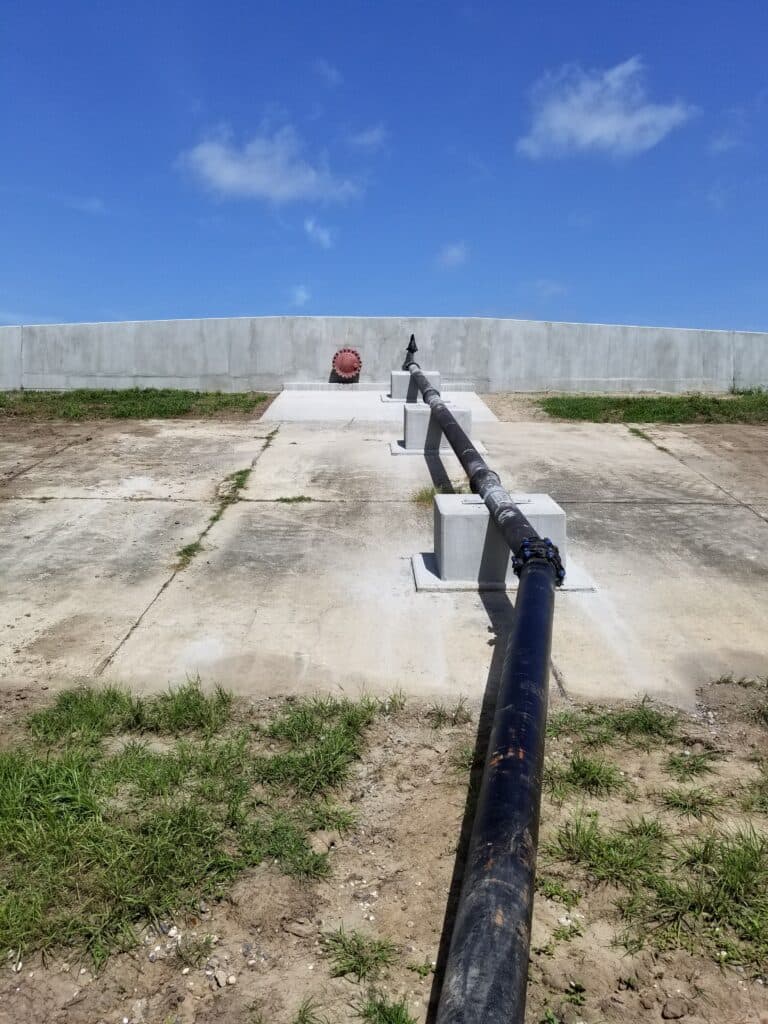
In 2016 MSMM Engineering completed full engineering design services for a Section 219 Environmental Infrastructure project in Ascension Parish, LA. This project was designed under a partnership between the USACE New Orleans District and cost sharing partner Ascension Parish. The project was constructed as a result of antiquated wastewater infrastructure in Ascension Parish that would not allow the Parish to support future growth. Under the Section 219, Environmental Infrastructure program, MSMM staff prepared GIS mapping of the Parish’s existing and proposed sanitary sewer system and prepared an Environmental Information Document (EID) for its long term wastewater infrastructure plan. The completed EID led to a decision that Ascension Parish needed to make significant upgrades to their public infrastructure system, specifically water lines and sanitary sewer systems in order to meet various environmental regulations they were out of compliance with. MSMM identified alternatives that would route effluent drainage away from a neighborhood ditch and properly treat it to be within LA DEQ regulations. This led to the design and construction of a sewerage project that consisted of a 562 gpm sewerage pump station and 4,068 feet of discharge pipe that travels underneath two (2) state highways and over the Mississippi River Levee before discharging into the Mississippi River. The pipe material is mostly ductile iron for above grade application (levee crossing) and is HDPE (high density polyethylene) for the directional drill aspect of the project. The project required extensive permitting through LADODT, LADEQ, CRPA and USACE New Orleans District. MSMM completed 100% of the required design and permitting services for the project, performed the construction management and engineering during construction, and worked with USACE to close out the construction phase of the project and prepare the new cross sectional drawings of the improved levee.

Hillaryville, Ascension Parish, LA

Hillaryville Regional Wastewater Treatment Plant
Water & Wastewater|2021|Completed

Hillaryville Regional Wastewater Treatment Plant

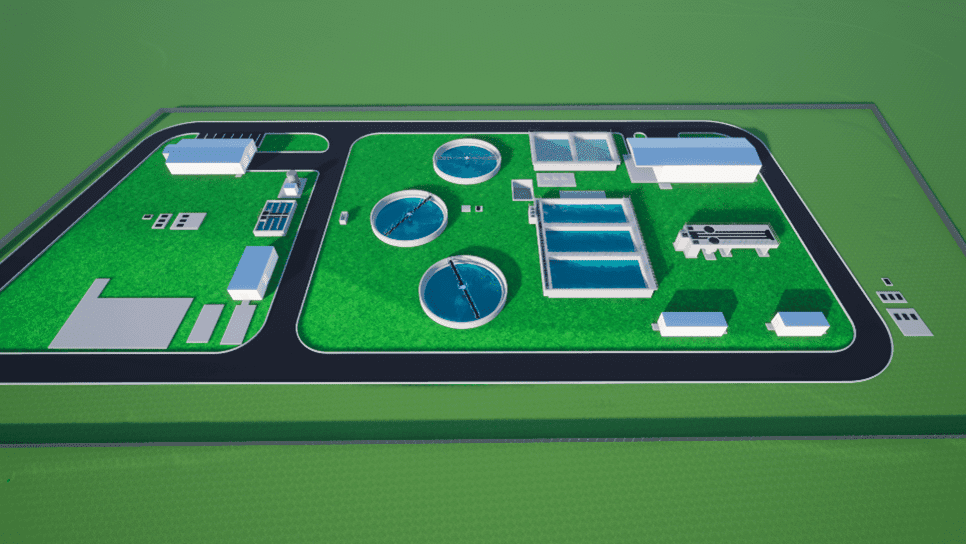
Through a federal program to fund Environmental Infrastructure programs within local municipalities, MSMM representing the USACE New Orleans District, worked with the Ascension Parish Government, LA (non-Federal sponsor) to design a regional wastewater treatment plant (WWTP) adjacent to the recent MSMM designed sewer effluent pump station (separate task order). This area of Ascension Parish utilizes a fragmented system of treatment options with subpar results that vary by subdivision based on each developer at the time. It includes septic tanks, package treatment plants, and an oxidation pond all of which discharge into local ditches and streams. High growth in this area of Ascension Parish including a large new subdivision being added and expansion of existing subdivisions will continue to contribute to a poor environmental situation. The WWTP was one step of a regionalization plan MSMM was involved in developing to bring all wastewater in the area to a single advanced treatment facility that would eventually discharge the treated effluent into the Mississippi River in lieu of local ditches. For this project our team was responsible for providing 100% bid ready plans and specifications (in USACE format) for a new 1.8 million gallon per day (mgd) average daily flow WWTP to increase treatment capacity and facilitate the regionalization of the Parish. The treatment plant design includes a new treatment plant on an eight (8) acre parcel of land owned by Ascension Parish. The design consisted of a dual set of treatment processes for redundancy and included an influent pump station, headworks with screens and grit removal, extended aeration basin, circular clarifier, chlorine contact chamber, aerobic digesters, belt filter press with new building, maintenance/administration building, and emergency generator as well as site drainage and internal asphalt roadways. The facility is designed so that a future aeration basin and clarifier can be constructed to easily upgrade the treatment plant to 2.7 mgd as additional capacity is needed. In addition to the bid ready design documents, our team is also responsible for project permitting through USACE, LADEQ, LADHH, LADOTD and CPRA of Louisiana. Additionally, our team was responsible for detailed MCACES cost estimating, presentations at public meetings, survey and detailed geotechnical investigations. Under construction phase services our responsibilities shall include shop drawing review and approval, RFI’s, site visits and project meetings. The project construction is currently not scheduled and MSMM has completed 100% design for this project pending final review.

Ascension Parish, LA

Jefferson Parish Sewer Infiltration and Inflow Management (Phase 2)
Water & Wastewater|In Progress

Jefferson Parish Sewer Infiltration and Inflow Management (Phase 2)

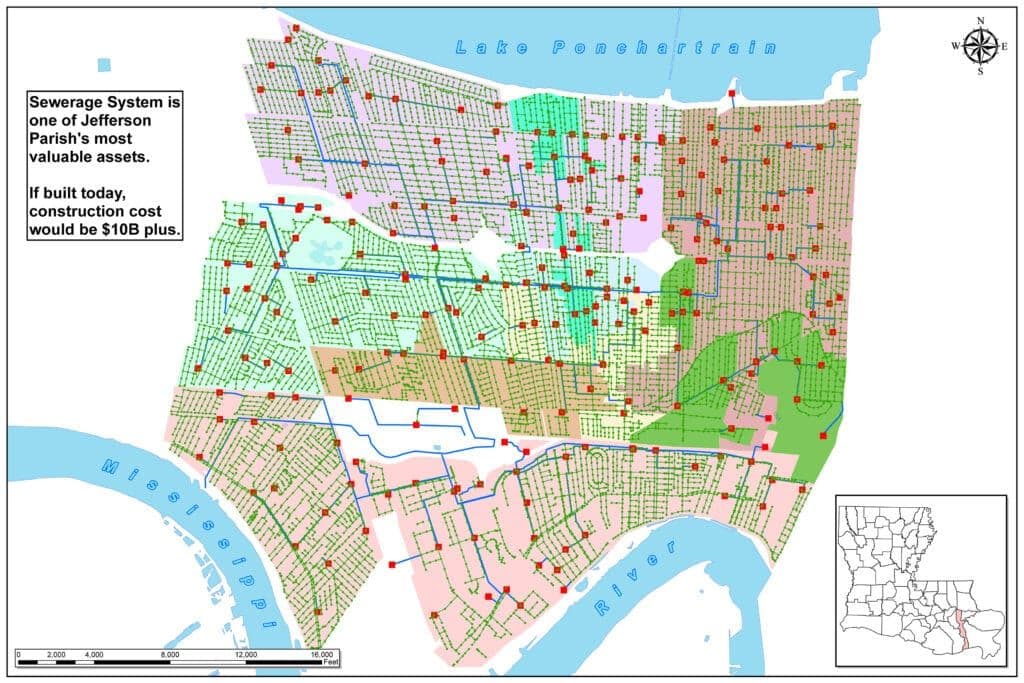
MSMM principals conducted field survey of sewer manholes and pump stations utilizing GPS equipment (GPS System 500) and SKI-Pro software (both from Leica Geosystems), data entry into database and management of database (MS Access) to create and maintain Jefferson Parish’s intricate wastewater collection system network in ArcGIS software, mapping of the system’s features, followed by hydraulic modeling (InfoWorks) to identify problem areas under various storm conditions graphically within a GIS mapping environment, and recommend capacity and rehabilitation improvements to minimize rainfall derived infiltration and inflow (I&I) and related sanitary sewer overflows (SSOs). Detailed field investigation of nearly 6,000 manholes and 250 plus pump stations were conducted. Many rehabilitation projects have been identified costing upwards of $500 million, along with identifying many areas that will require sewer system evaluation surveys (SSES) to further pinpoint problem locations and causes. A total of twenty SSO areas were chosen for evaluation as part of this project. The total estimated cost of all recommended improvements as a result of model evaluation of 20 SSO areas located on the East Bank of Jefferson Parish was $21,858,424. Currently the hydraulic model is being updated to reflect recent construction projects and identify/rank the remaining areas in terms of need for action to resolve current issues.

Jefferson Parish, LA

Kennedy Heights Liftstation C9-2 Rehabilitation
Water & Wastewater|2020|Completed

Kennedy Heights Liftstation C9-2 Rehabilitation

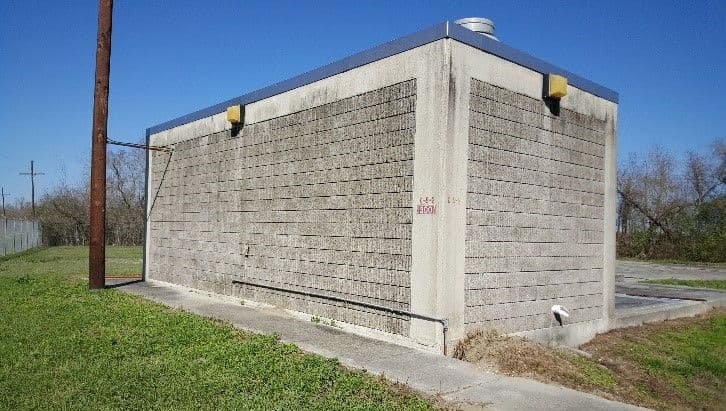
MSMM was tasked by the Jefferson Parish Department of Sewerage to provide full engineering design of sewer lift station rehabilitation to the Kennedy Heights Lift Station located in Westwego, LA. The Kennedy Heights station is a pre-constructed building located on a slab foundation that consists of four total pumps, of which only one was operational. The discharge forcemain consisted of a 24-inch diameter Price Brothers pipe that discharges to the Avondale North lift station. The Wet Well is lined with t-lock but required inspection and minor rehabilitation during construction. The lift station required replacement of pumps, piping, valves, controls and other rehabilitation items. MSMM tasks on this project consisted of full engineering and design of rehabilitation features to make this station completely operational again. This included: replacing the pumps, replacing the control panel, replacing discharge piping and valves, replacing the sluice gates, rehabilitation to the influent junction box, replacing the surge relief valve, replacing the building door, replacing the three round wet well manhole access covers with aluminum hatches, installing a restroom, and replacing the valve pit grating. MSMM completed full engineering and design in early 2019 and oversaw the construction administration. Construction was completed in March 2020.

Westwego, LA

Lake Mechant Landbridge Restoration
Coastal Restoration|2020|Completed

Lake Mechant Landbridge Restoration

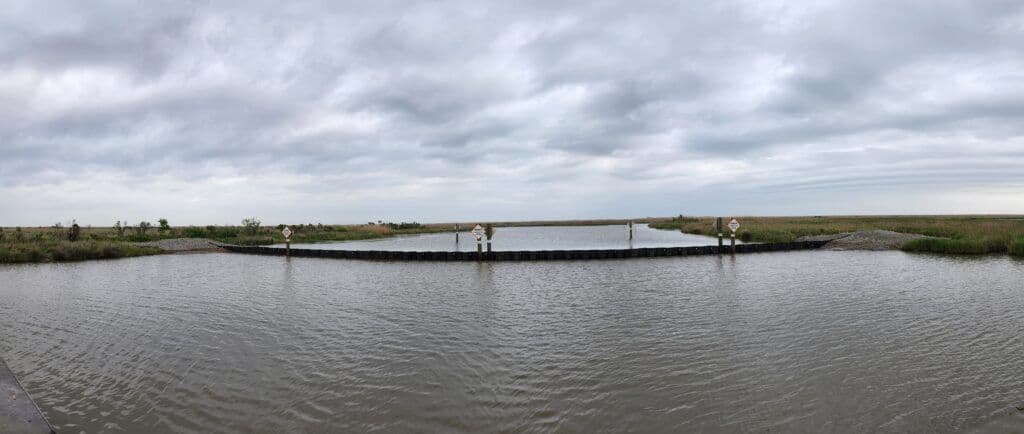
MSMM was tasked by the Coastal Protection & Restoration Authority (CPRA) of Louisiana to perform all engineering services associated with the restoration of a sheet pile plug that was damaged in Terrebonne Parish during Hurricane Isaac in 2012. Steel Sheet pile Plug #2 was severely damaged, with a large portion of the 280’ long structure leaning over in the center, and since the original collapse, the condition of the sheet pile has deteriorated and become a boating hazard. The plug was initially installed as part of the Coastal Wetlands Planning, Protection and Restoration Act (CWPPRA) of Louisiana to serve as a barrier to saltwater intrusion in order to improve the marsh behind the structure for environmental restoration habitat and for the multiple lines of defense theory for hurricane protection. The sheet pile plug crosses an access canal between Lake Pagie and Lake Mechant. The original plug was constructed using PDA-27 Grade 42 steel sheet pile sections to an elevation of 4 feet NAVD88. The sheet pile was installed to a maximum depth of -23.0 feet NAVD88. The plug is 282 feet long with earthen wingwalls construction at both ends to an elevation of 5 feet NAVD88. The wingwalls were constructed from dredged material and armored with articulated concrete mats on geotextile fabric. As part of the design services for the project, MSMM completed an initial survey of the dilapidated structure and determined that a large scour hole had formed in the water bottom near the middle of the structure. The MSMM engineering staff determined that the structure would have to be re-located. Additional survey was collected to determine the extent of the scour hole and it was decided that the new structure required re-location outside of the scour hole footprint, approximately 175 feet to the North of the existing structure. Multiple structures were evaluated, and it was determined that a combi-wall structure fortified with large stone at the toe of the structure would be utilized to replace the structure. The new structure was designed assuming a large storm surge and was fortified to withstand extreme wind and flooding conditions. The project design was finalized in late 2019 and all permits were obtained by the Summer of 2020. The project is currently out to bid, and construction is supposed to commence in late 2020.

Terrebonne Parish, LA

Nicolle Boulevard Resurfacing
Public Infrastructure|Completed

Nicolle Boulevard Resurfacing

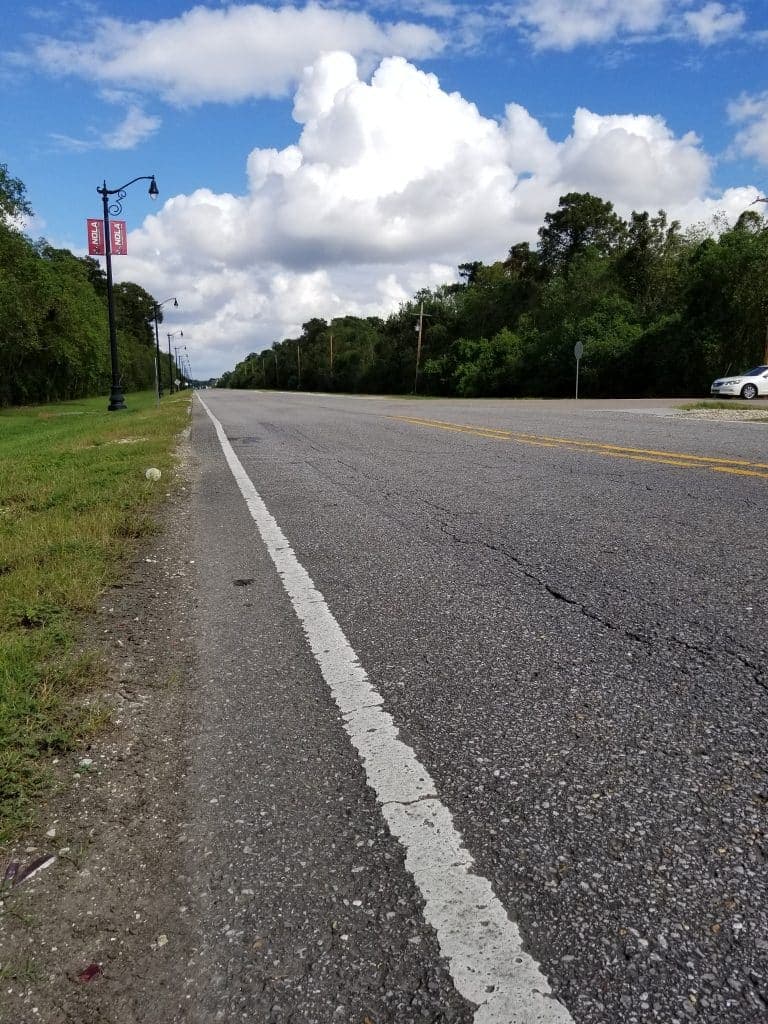
MSMM was awarded as sole entity, the full engineering design services for the mill and overlay of Nicolle Blvd. from Lapalco Blvd. to Jamie Blvd. The reconstruction of Nicolle Blvd. included the assessment and replacement of base failure locations, as well as providing a left turn lane for the Technology Center. There are two parts to this project; the first part being the mill and overlay of Nicolle Blvd, which included the cold milling of 3 inches and the replacement with two 1.5” lifts of asphalt including the use of glass grid to diminish reflective cracking and the second part was the full replacement of the concrete roadway boulevard segment between Jamie Blvd and Pat Drive, which included the replacement of driveway aprons, sidewalks, as well as the complete replacement of handicap ramps. MSMM performed Construction Administrative services including administering the pre-construction meeting, review of material submittals, attendance of progress meetings, review of Contractor’s pay applications, review of the Inspector’s daily reports and project close-out.

Westwego, LA

Silver Jackets — Jefferson Parish Green Infrastructure & Watershed Master Plan
H & H Modeling|In Progress

Silver Jackets — Jefferson Parish Green Infrastructure & Watershed Master Plan

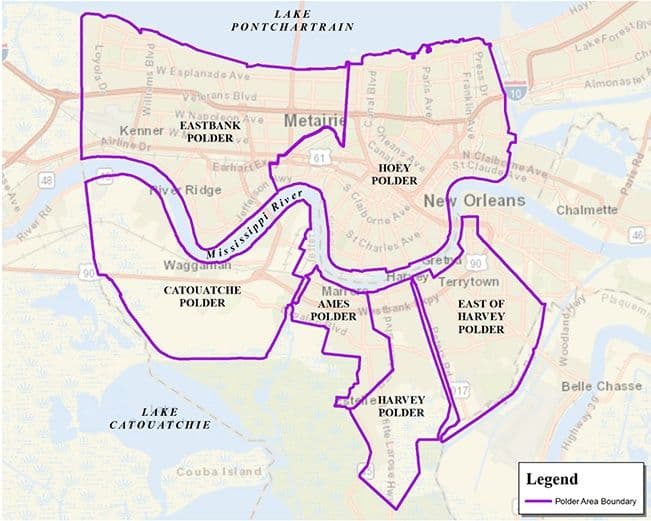
Through the United States Army Corps of Engineers Silver Jackets program, MSMM is currently developing a Watershed Master Plan inclusive of Green Infrastructure elements for Jefferson Parish. The developed plan promotes coordinated decision-making, reduces increased flooding from future conditions and identifies segments of green infrastructure elements in the Fat City portion of the Parish. MSMM engineering staff have reviewed hydrologic and hydraulic (H&H) models, performed new modeling to validate designed rainfall runoff retention rates, derived watershed behavior, assessed the impacts of multiple rainfall/storm events in specific areas, and developed a subset of non-structural mitigation actions that were promoted within regions 6 and 8 of the Louisiana Watershed Initiative. MSMM continues to collect and analyze local storm water data for the purpose of identifying storm water management issues, integrated storm water best management practices that could be implemented, and possible solutions on public and provide land. The goal will be a project listing that prioritizes watershed-based projects that will reduce peak storm conditions. MSMM is in the preliminary stages of development, having received the Jefferson Parish model, example Watershed Master Plan documents and community and stakeholder feedback, preliminary concepts are currently being modeled that will ultimately be recommended in the final plan. Additionally, non-structural measures are being investigated on the East and West Banks for consideration in the final plan. Green infrastructure measures under consideration for incorporation consist of permeable pavement, bioretention areas, bioswales, rain gardens, small pump stations, landscaping options, conveyance systems and multiple floodplain management options designed to shave the peak off each rainfall event. Development of the Jefferson Parish Watershed Management Master Plan, (WMP) gave MSMM the dual opportunities of assisting parish leadership in developing strategies to prepare the drainage system for future sea level rise and of assisting the parish residents in lowering their flood insurance rates. Working through the US Army Corps of Silver Jackets program, MSMM provided lead assistance in the ongoing process of acquiring National Flood Insurance Program (NFIP) credit for developing the WMP as part of the Community Rating System (CRS), a voluntary incentive program that recognizes and encourages community floodplain management practices that exceed the minimum requirements of the NFIP. The NFIP considers a WMP to be the result of a hydrologic and hydraulic study of the watershed using a hydrograph approach, examining both existing and future development conditions, and under different management scenarios. For CRS credit it must model at least the 100-year fully developed watershed at a scale sufficient to determine local problems. Utilizing the parish’s existing SWMM models, MSMM adjusted input parameters for rising sea levels, changing storm patterns as projected in the NOAA Atlas 14 rain models, and changing development plans as projected in the Jefferson Parish future land use plan. The output from this modeling effort was then quantified in terms of water surface elevation changes and then processed into an info-graphics format so the results could be easily interpreted by planners and decision makers. Utilizing modeling results, FEMA CRS guidance criteria, Jefferson Parish planning studies, input from the parish, and MSMM broad experience from previous drainage and flood studies; a series of recommended watershed management strategies were developed. These recommendations ranged from proposed implementation of standard low impact development principles, such as use of permeable pavements and bio-swales, to specific unique recommendations for Jefferson Parish watershed management regarding pump maintenance considerations, generation capacity and levee resiliency planning. This information will be used in developing management plans and preparing stormwater management regulations to insure that the Jefferson Parish stormwater management program is prepared for future environmental changes and planned development.

Jefferson Parish, LA